Varosha (Maraş), Northern Cyprus - February 2026
FORBIDDEN ZONE - Varosha, Northern Cyprus, February 2026
A ghost town frozen in time - the abandoned resort of Varosha, sealed since 1974 and partially reopened as a political act in 2020.
In February 1974, Varosha was one of the most glamorous resort towns in the Mediterranean. Its luxury hotels lined a golden beach, its streets were crowded with tourists and locals alike. Then, in August of that year, the population fled within hours and the city was sealed. For nearly half a century, it existed only in photographs and in the memories of those who had left.
Today, Varosha is a “Forbidden Zone”, a designation that is both official and deeply contested. In 2020, parts of the city were reopened to visitors by the Turkish Cypriot authorities, a move condemned by the United Nations as a violation of Security Council Resolutions 550 and 789. The UN peacekeeping force UNFICYP continues to monitor the area, its mandate a reminder that this is not a ruin but a political wound, still open.
I visited Varosha in February 2026. The tourist coaches were there, the new signs pointing toward “historic” streets. But just beyond the sanctioned pathways, the hotels still stand, windows dark, balconies collapsed, nature slowly reclaiming what people abandoned. This is not a ghost town. It is a city held in suspension, a place where time was stopped by force and where the question of what comes next remains, more than fifty years later, unanswered.
Photographs: © Olaf Eckhardt 2026
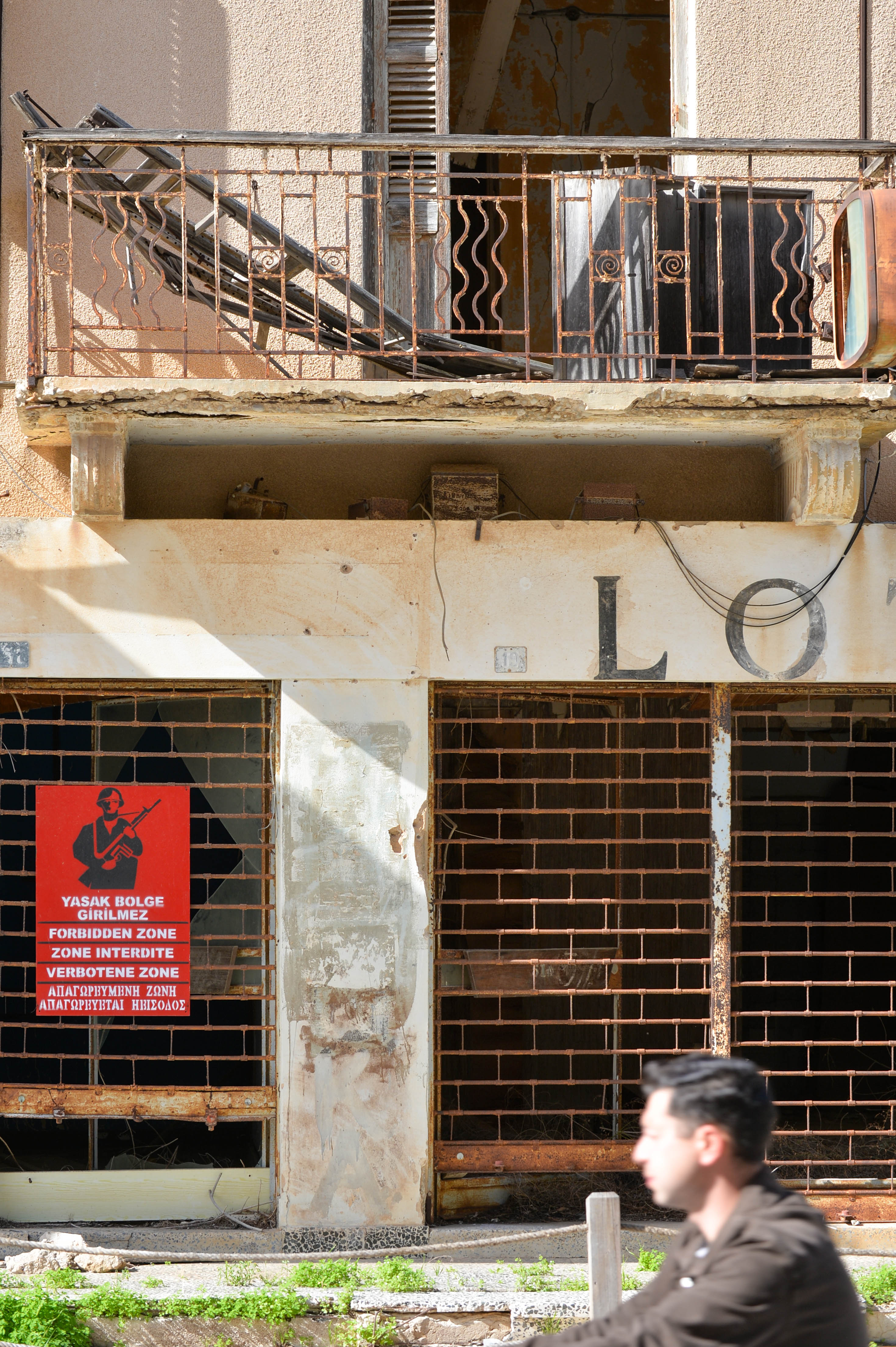
A multilingual military warning sign, in Turkish, English, French, German and Greek, marks the boundary of the still-restricted zone within Varosha, as a visitor passes by. Despite UN Security Council resolutions calling for the town’s return to its original inhabitants under UN administration, Varosha remains under Turkish military control.
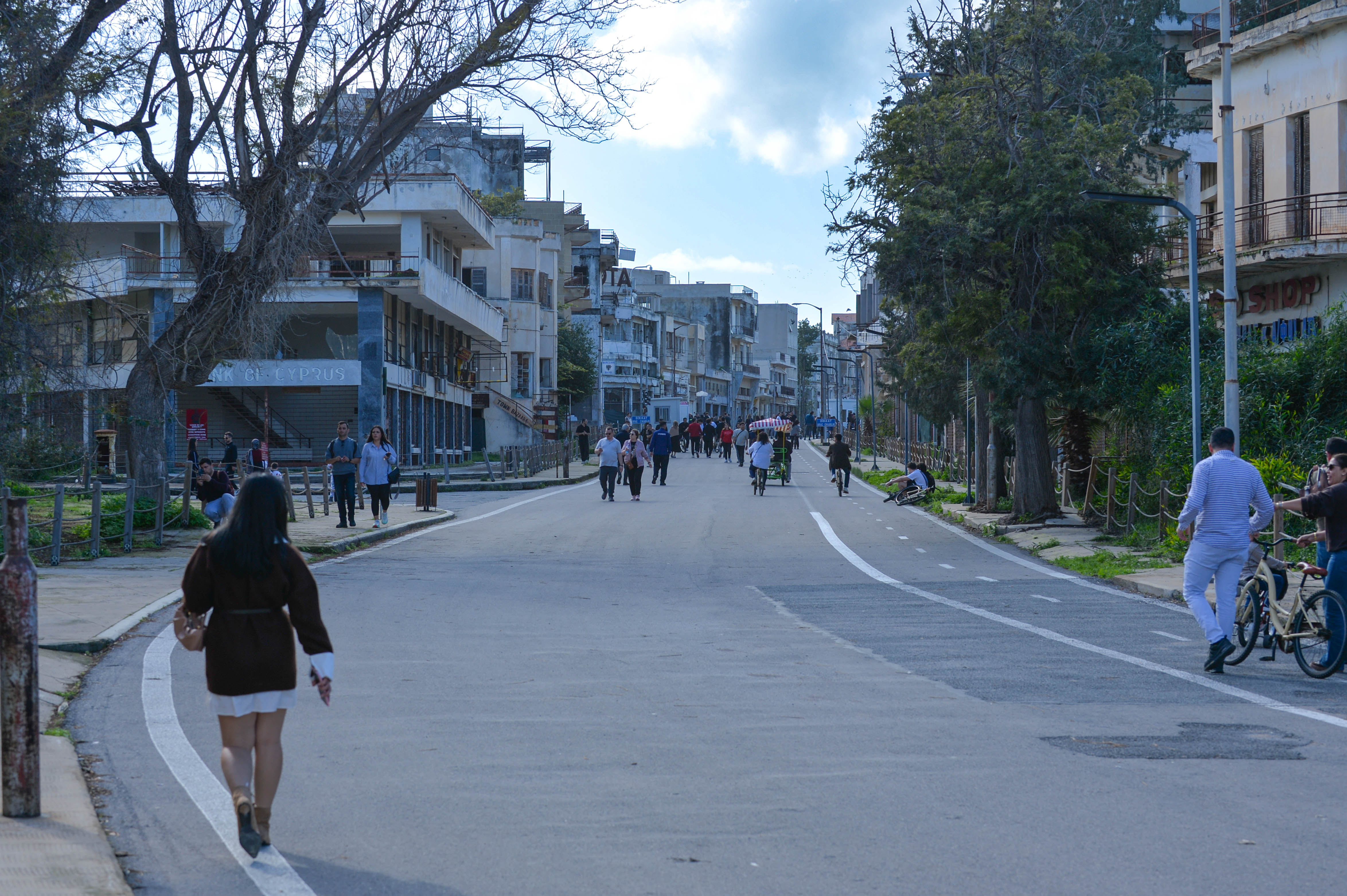
Visitors walk and cycle along the main boulevard of Varosha, lined on both sides by deteriorating apartment blocks and hotel facades. Since October 2020, the Turkish-Cypriot administration has opened designated parts of the town to day-trip tourism, a move condemned by the United Nations Security Council as a violation of international resolutions.
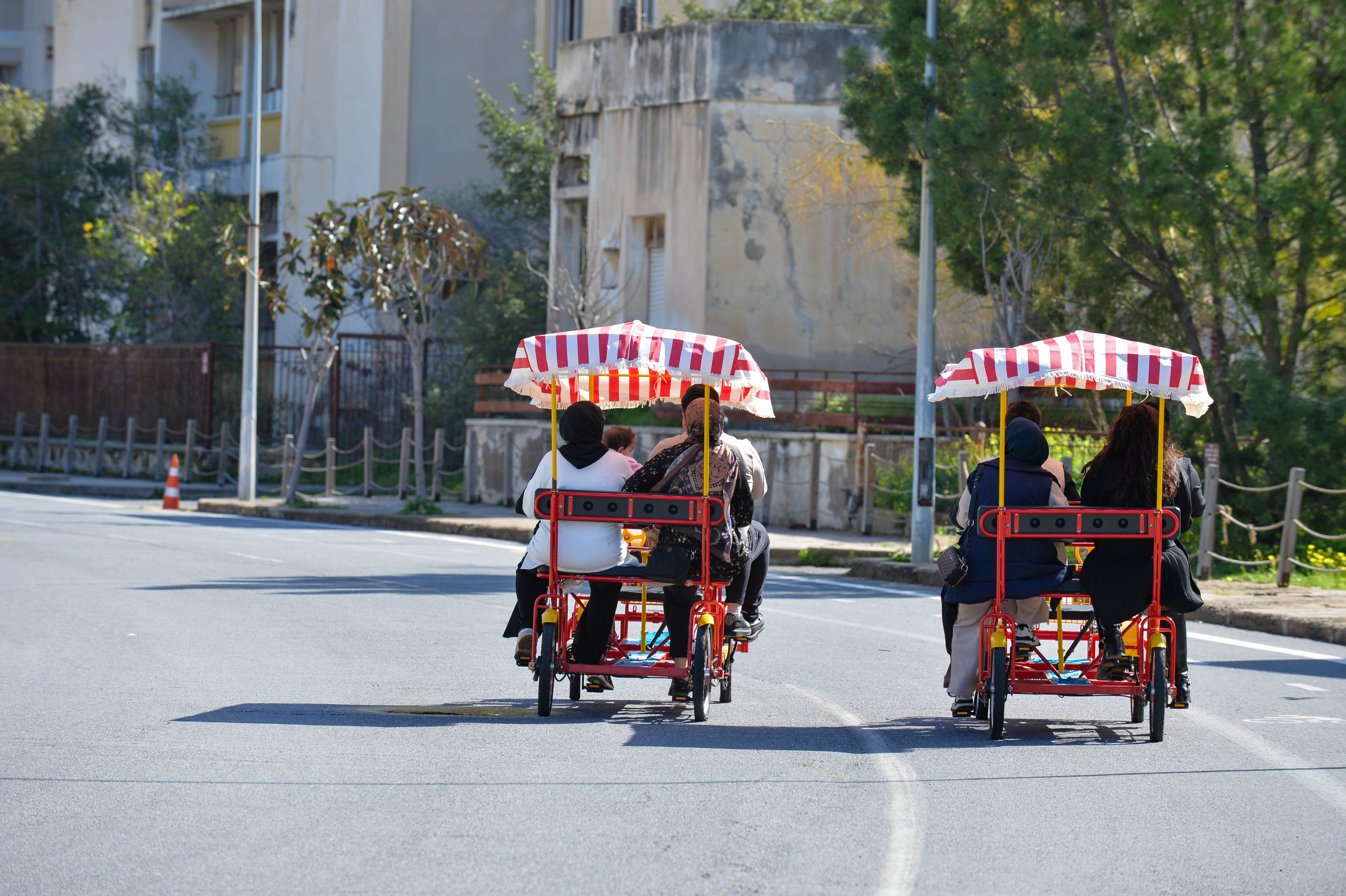
Families on pedal carts ride through Varosha past abandoned residential buildings. The partial reopening of the ghost town has attracted growing numbers of visitors, while the original Greek Cypriot inhabitants remain barred from returning to their properties.
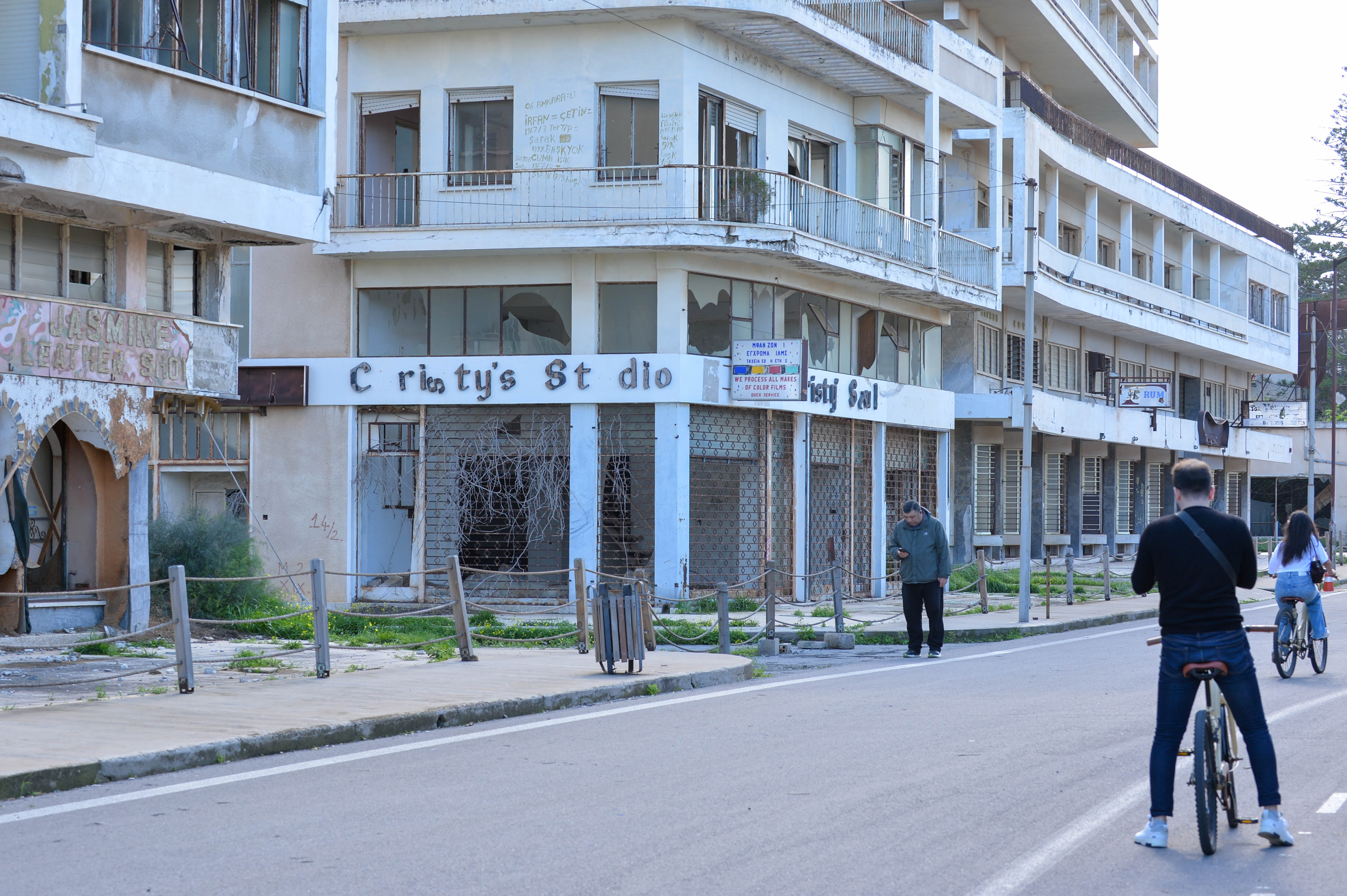
Visitors on bicycles and on foot pass in front of the former "Cristy's Studio" and "Jasmine Leather Shop" on the main commercial street of Varosha. Shop fronts that have stood empty since August 1974 now draw tourists, though the properties' rightful owners have never been allowed to return.
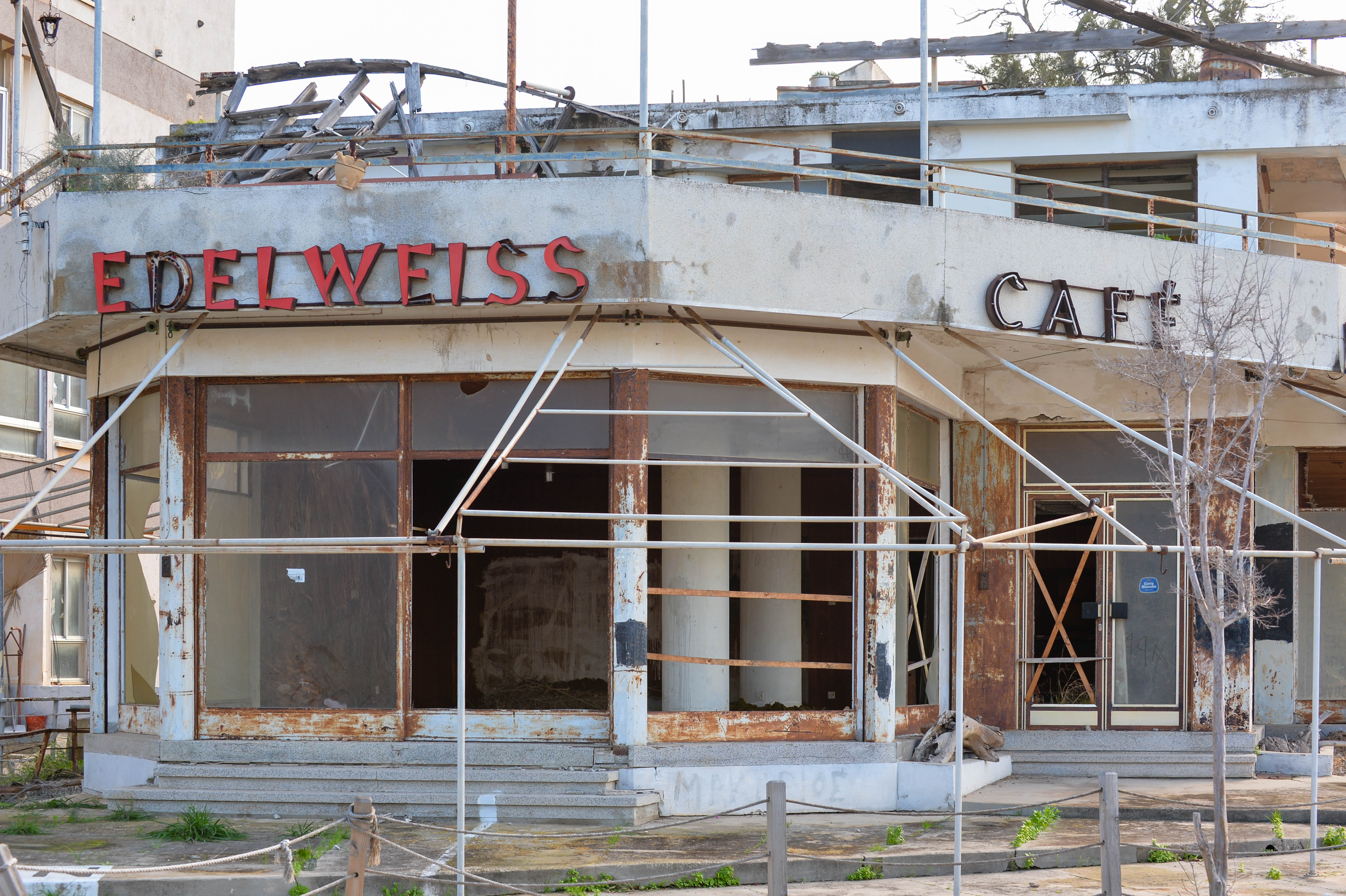
The “Edelweiss Café” sign survives on the façade of a collapsed building on Varosha’s former waterfront promenade. When Turkish forces sealed the town in 1974, the cafés, hotels and restaurants along this strip were left as they stood.
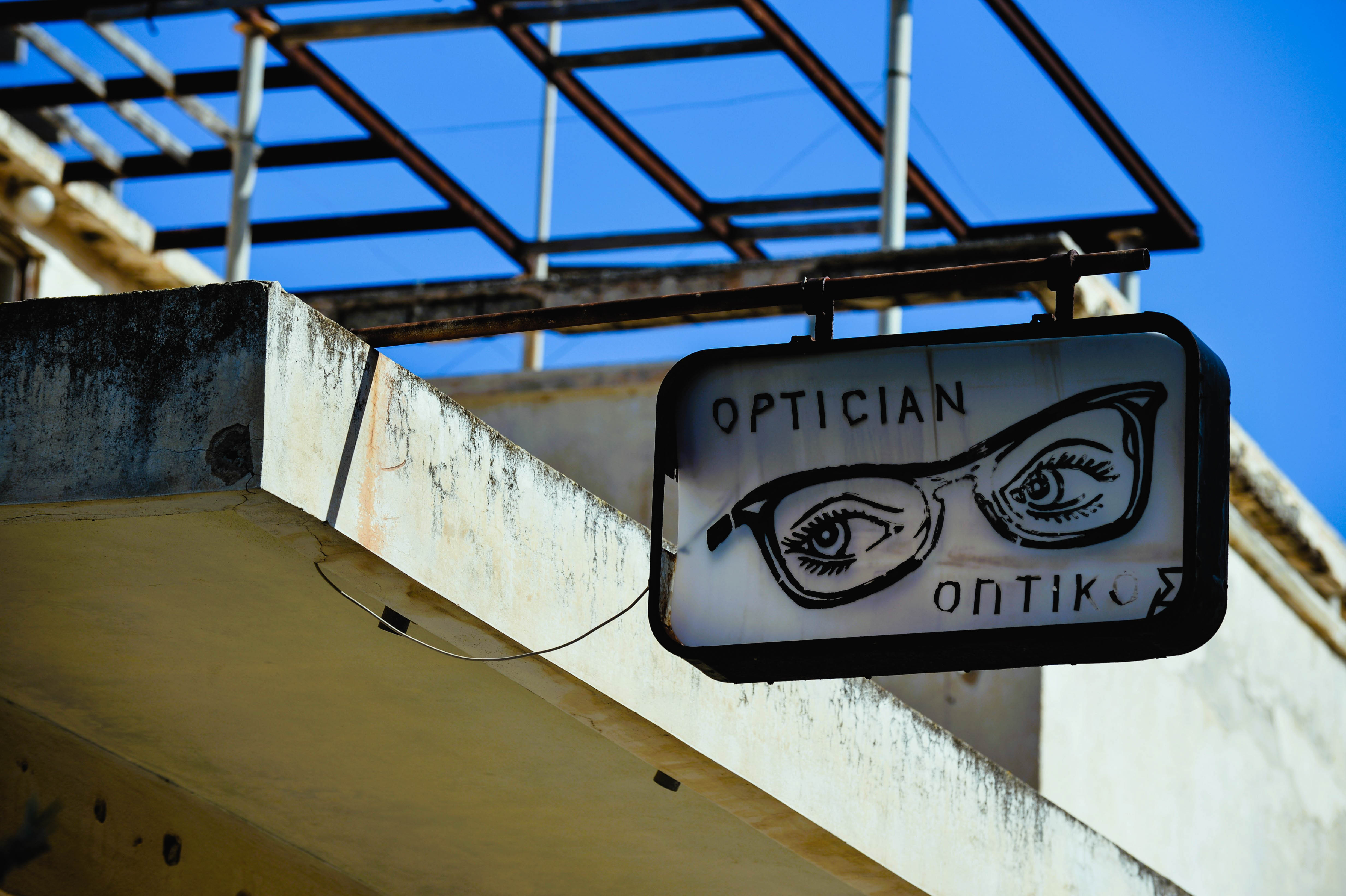
An “Optician / ΟΠΤΙΚΌ” sign hangs above a crumbling concrete overhang in Varosha. The signs of the town’s former commercial life.
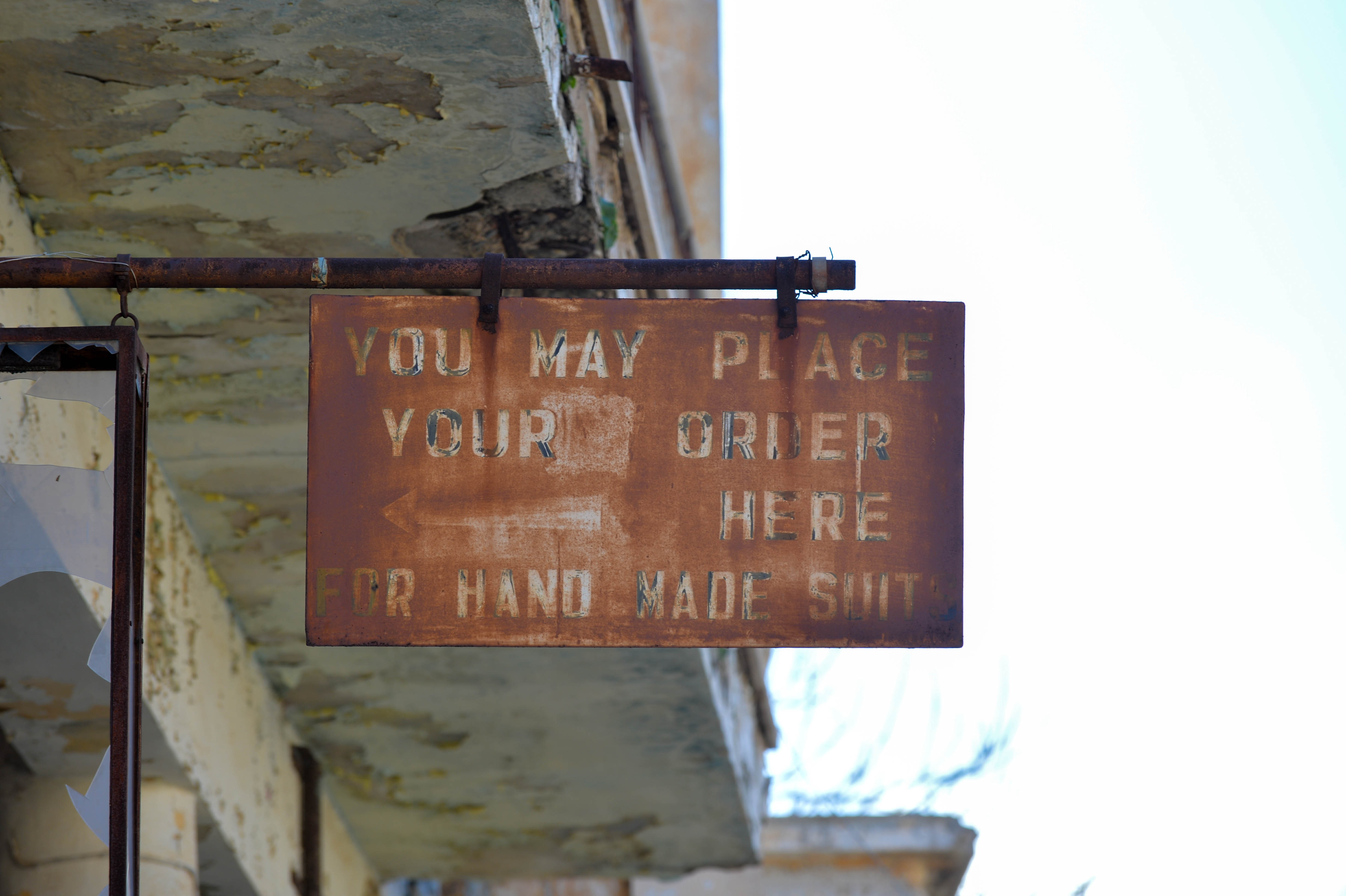
A heavily rusted sign outside an abandoned tailor’s shop reads: “You may place your order here for hand made suits.” The invitation has gone unanswered since August 1974.
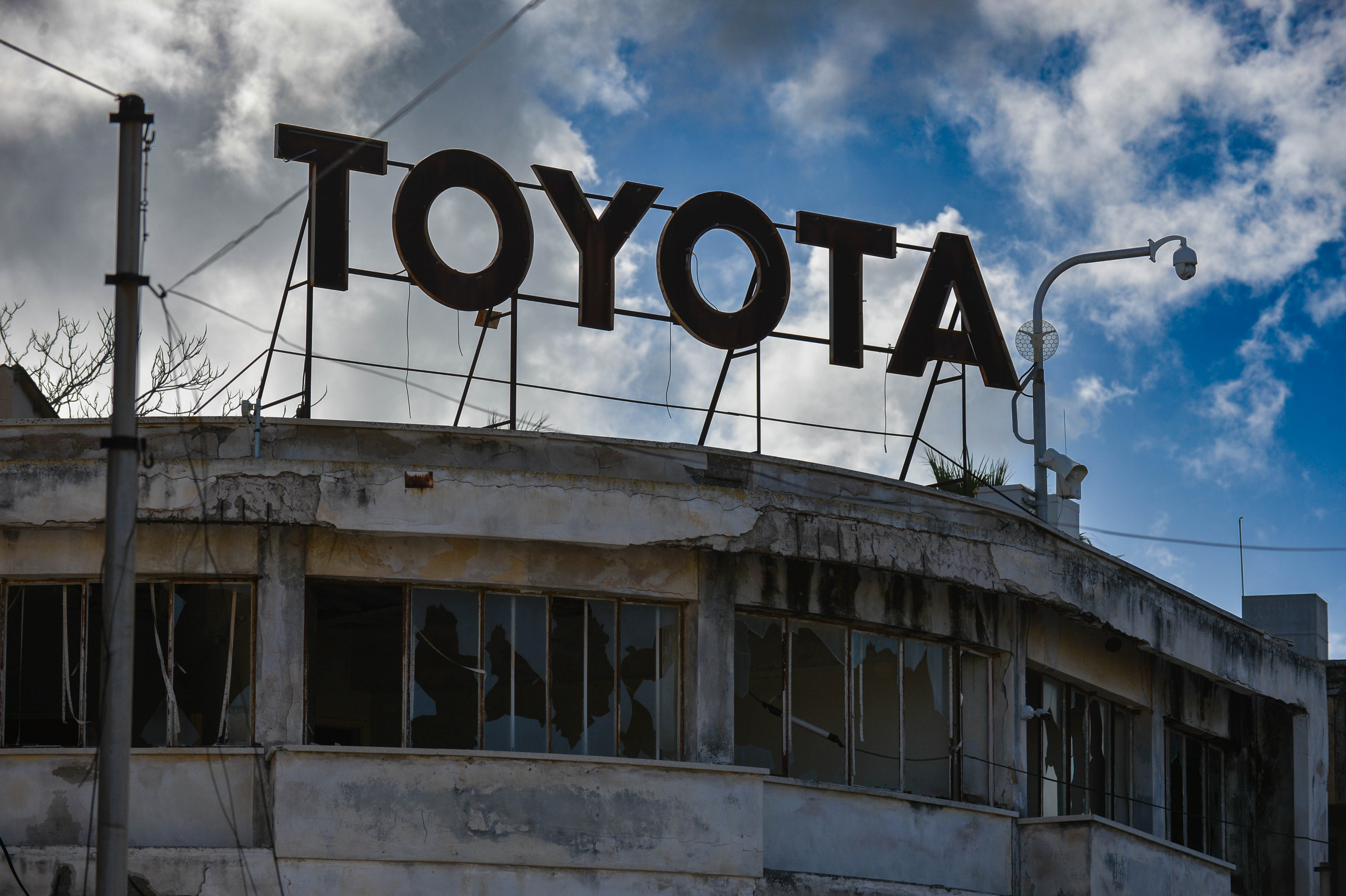
A Toyota dealership sign, a relic of the town’s commercial life before 1974, stands above a derelict building in Varosha, now monitored by surveillance cameras.
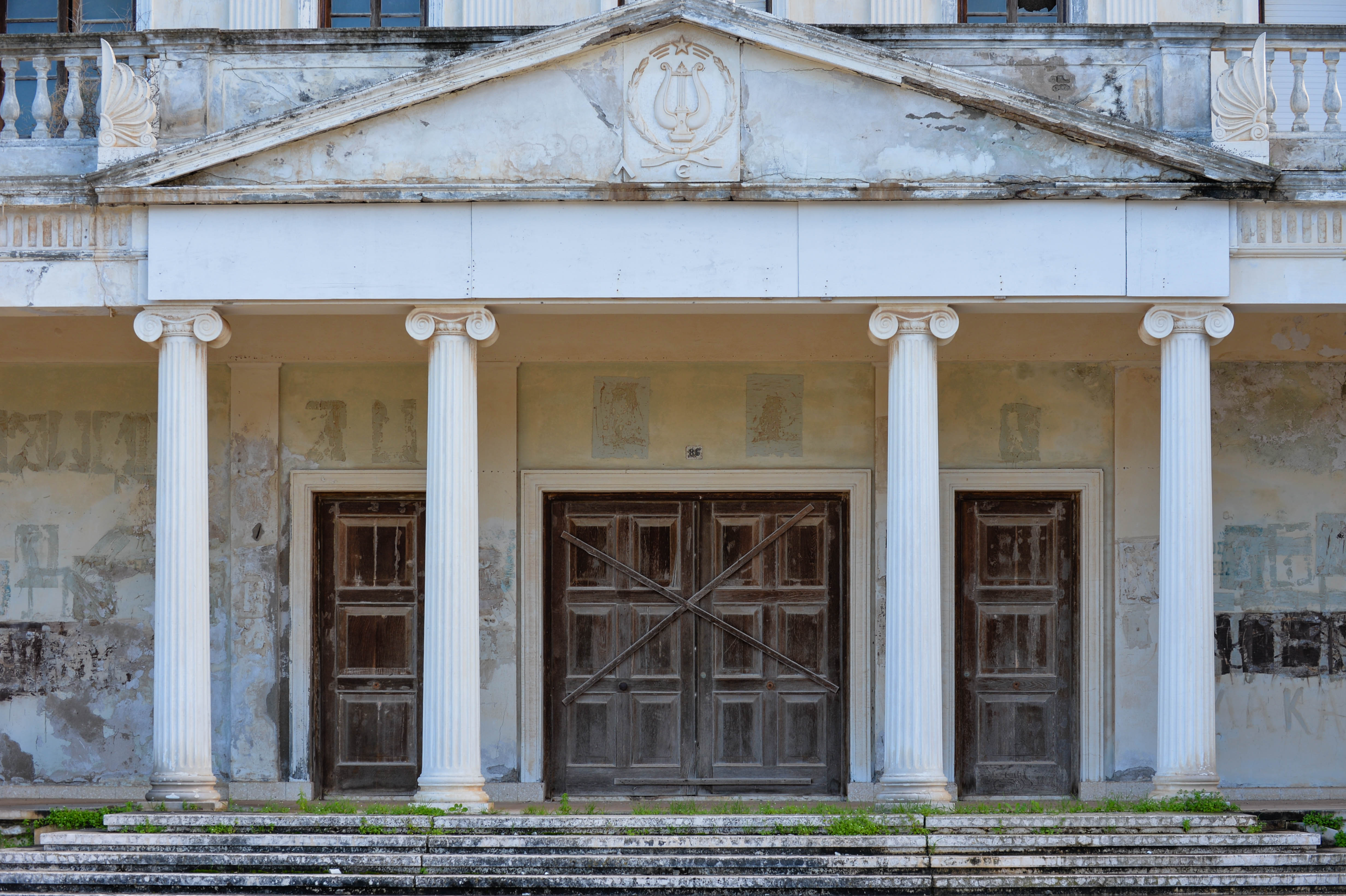
The neoclassical façade of a former civic building (Theater) stands sealed in Varosha, its main doors barred with wooden boards. The emblem above the entrance bears a lyre, a symbol of culture and community, in a town that has had neither for over fifty years.
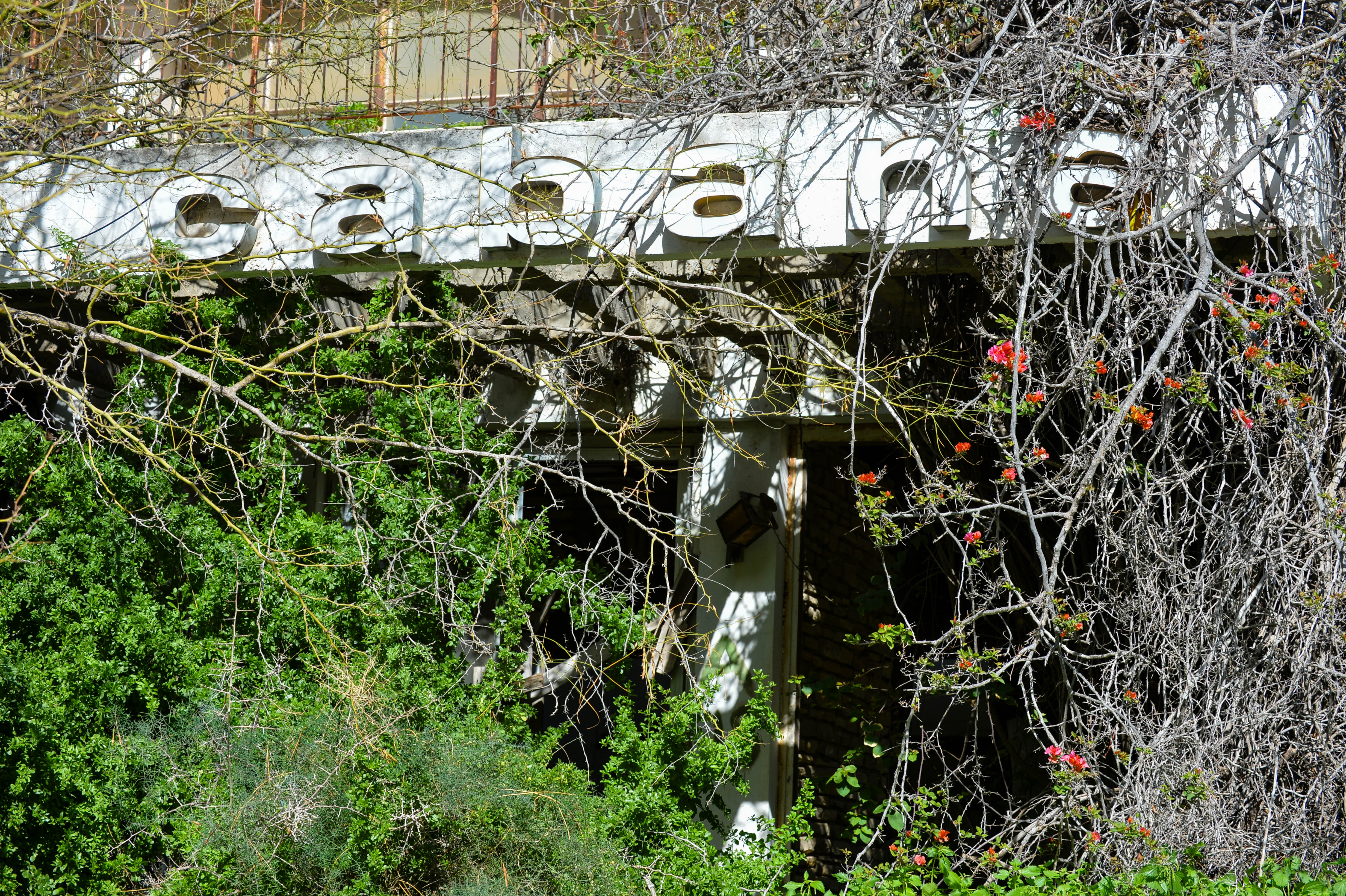
The letters of a former “Cabana” sign are half-consumed by vegetation on the façade of an abandoned hotel in Varosha. Wild bougainvillea now blooms where guests once checked in.
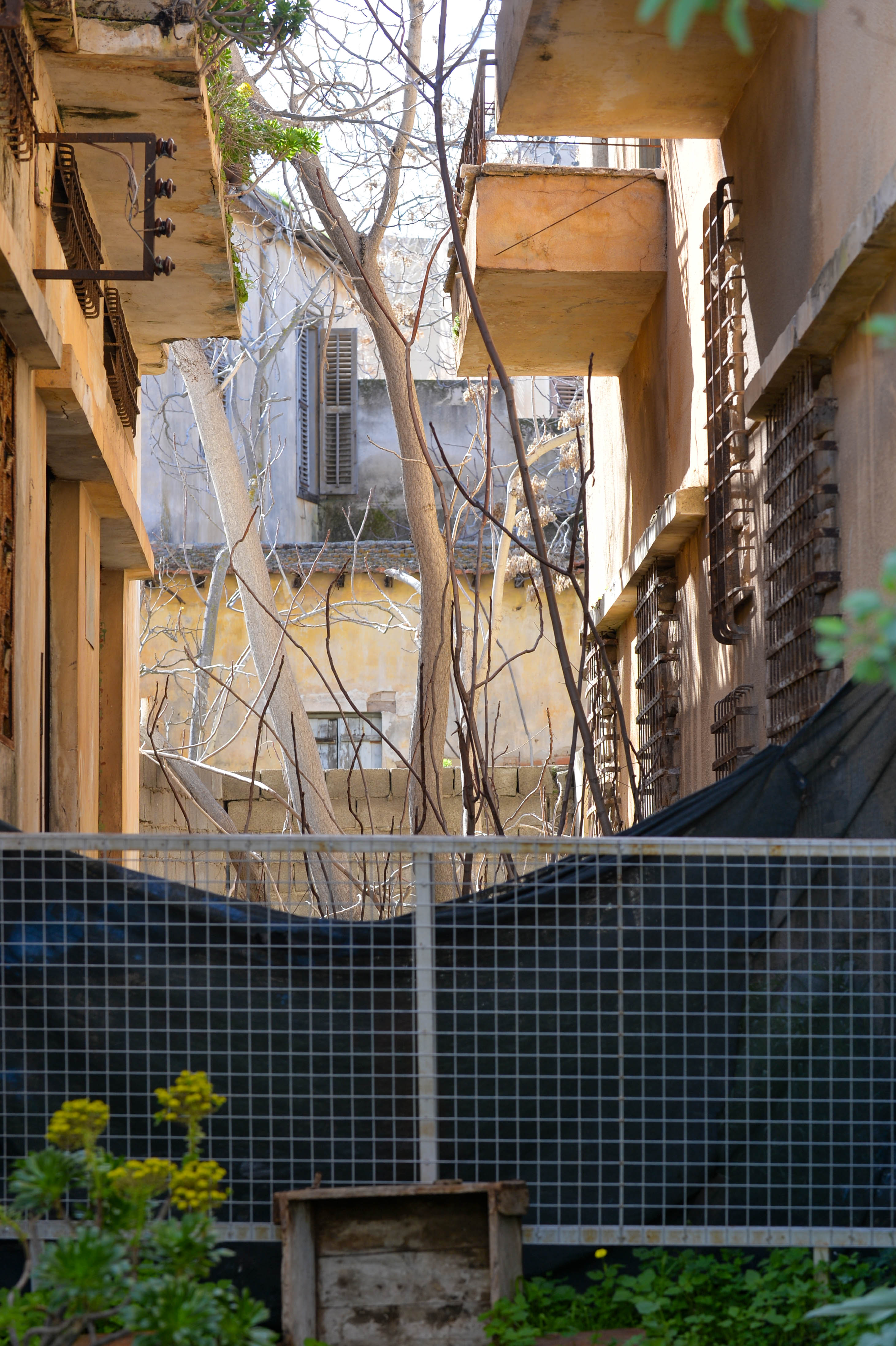
A metal barrier draped in black fabric marks the edge of the deeper restricted zone within Varosha, beyond which buildings remain inaccessible and unrenovated. Wild plants grow in a courtyard between abandoned apartment blocks on the other side of the fence.
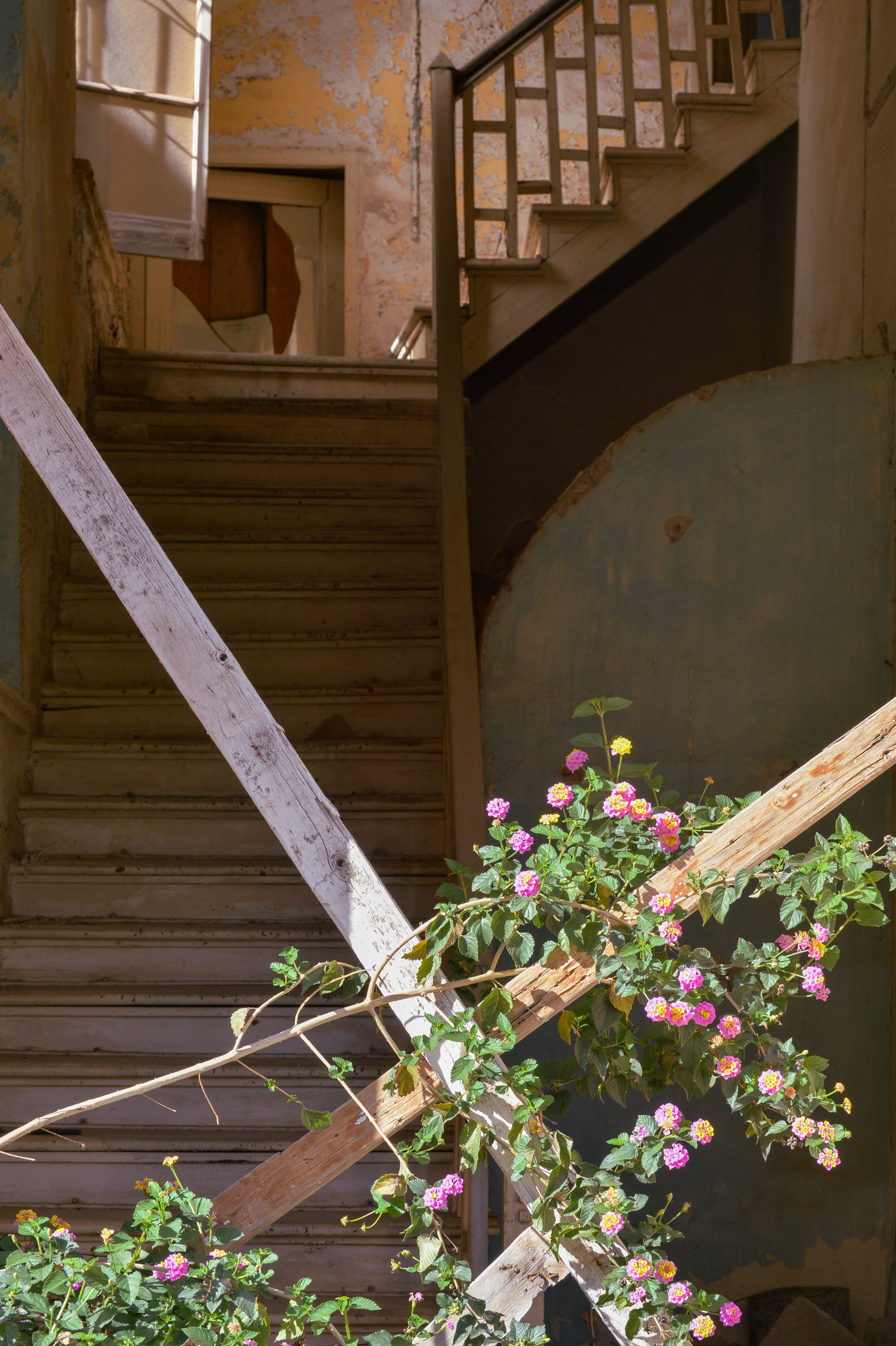
Lantana flowers bloom on the staircase of an abandoned building in Varosha, visible through an open entrance from the street. No building in Varosha may be entered; the town’s interiors have remained untouched and inaccessible.
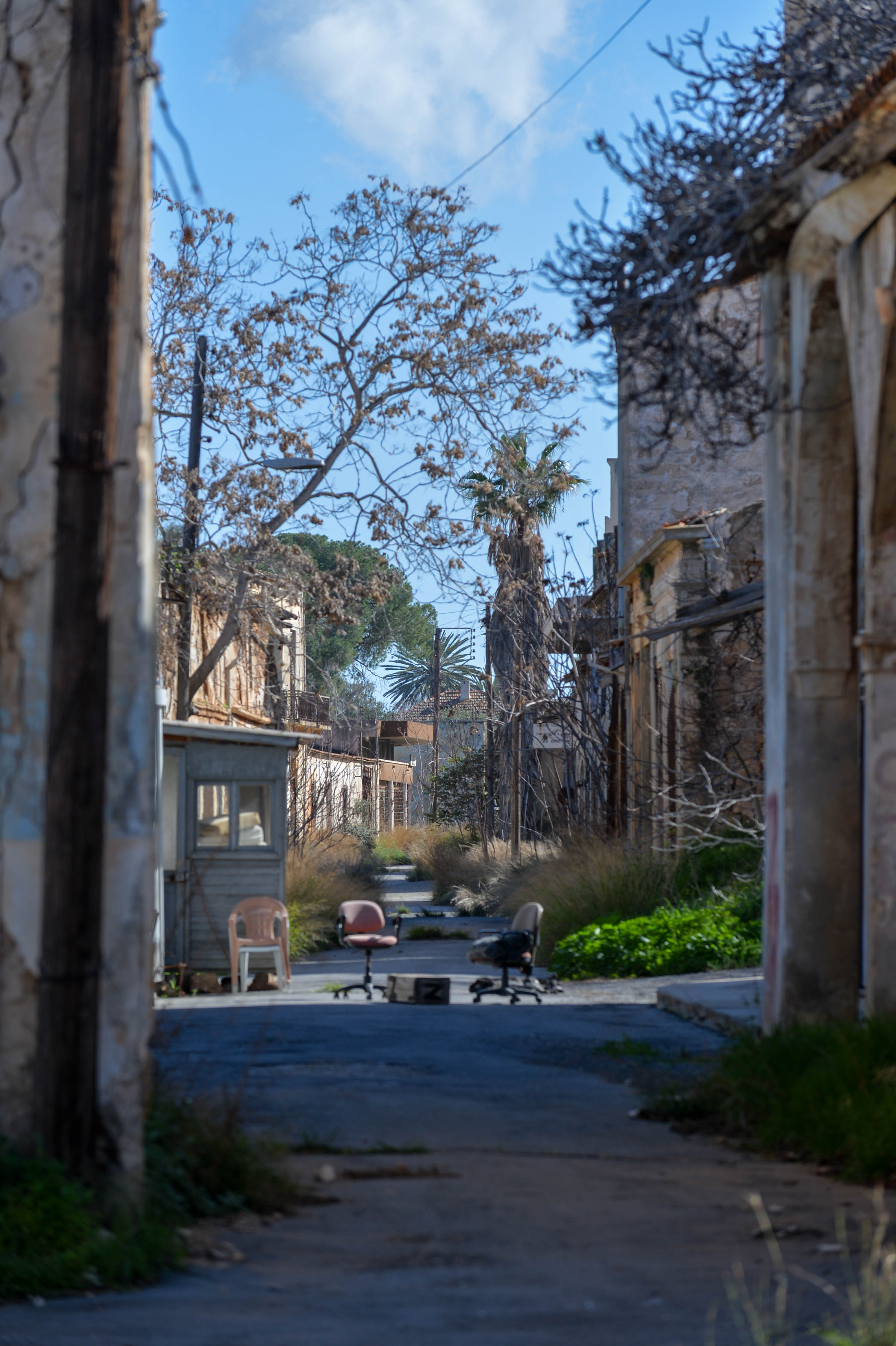
Three office chairs sit in the middle of an abandoned alley in Varosha, more than 50 years after the town’s 39,000 Greek Cypriot residents fled the advancing Turkish military in August 1974.
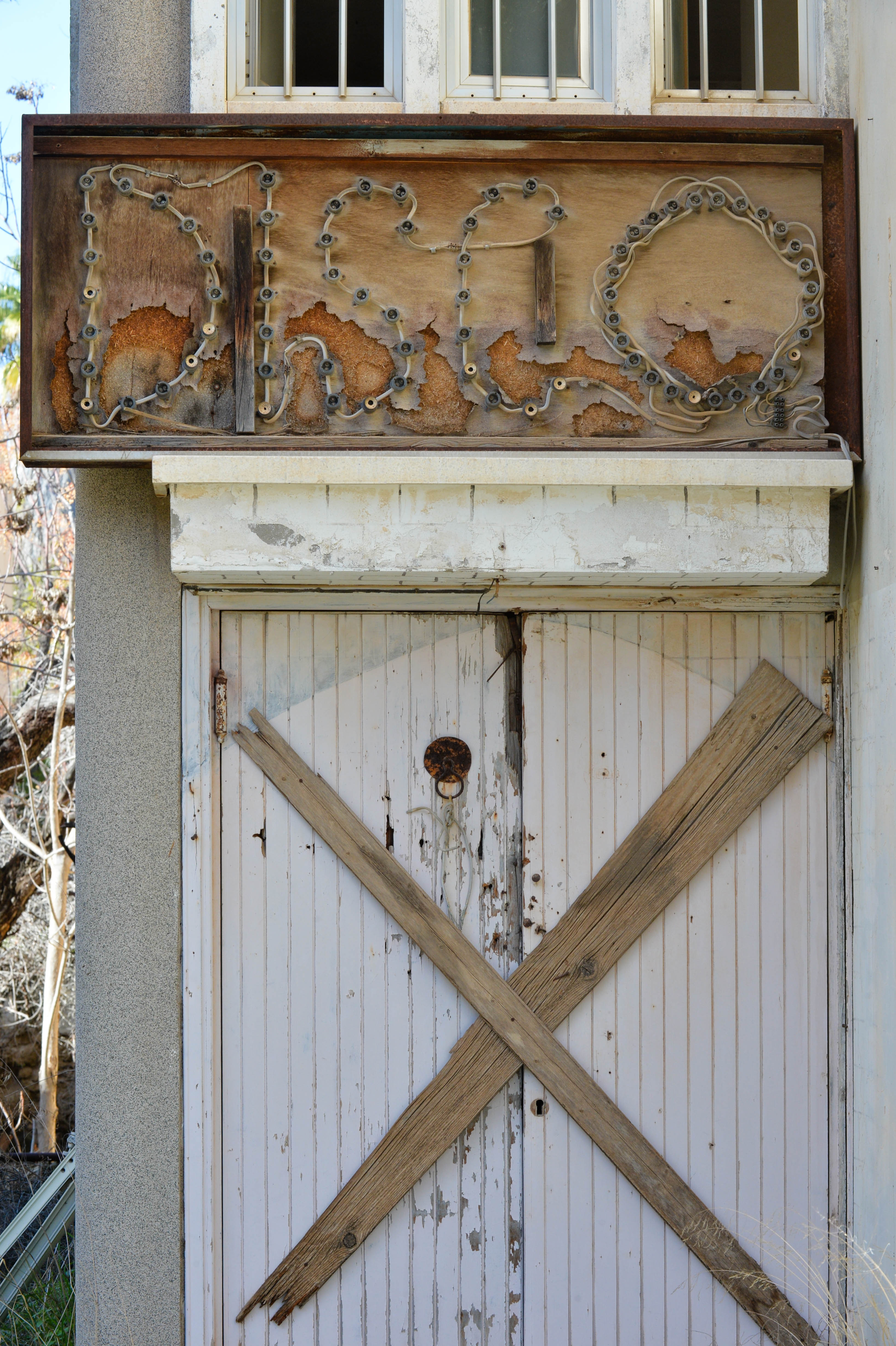
A rusted DISCO sign, its neon letters corroded, its bulbs long dark, hangs above a door nailed shut with wooden planks. The last patrons left in 1974 and the door has not opened since then.
© Olaf Eckhardt 2026 · All photographs taken 15 February 2026, Varosha (Maraş), Northern Cyprus